




Working Principle of Metal Hoses
Metal hoses are flexible piping components widely used in industrial systems to transport fluids and gases while accommodating movement, vibration, and thermal expansion. Compared with rigid pipes, metal hoses provide excellent flexibility and durability, making them suitable for applications in industries such as petrochemical processing, power generation, aerospace, machinery manufacturing, and heating systems. Their working principle is mainly based on the structural characteristics of corrugated metal tubes combined with protective layers and connection fittings, which allow them to maintain both strength and flexibility under demanding conditions.
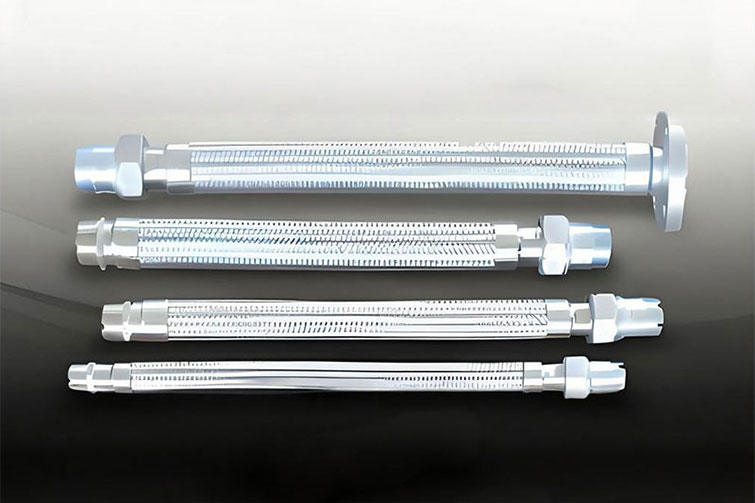
The core component of a metal hose is the corrugated metal tube. This tube is typically made from stainless steel or other corrosion-resistant alloys and is formed into a series of continuous waves or corrugations along its length. The corrugated structure is the key factor that provides flexibility. When the hose experiences bending, compression, or stretching, the corrugations can expand or contract slightly, allowing the hose to adapt to movement without causing structural damage. At the same time, the metal material ensures high mechanical strength and resistance to pressure.
One of the main functions of a metal hose is to absorb vibration and reduce mechanical stress in piping systems. In many industrial machines, pumps, compressors, and rotating equipment generate constant vibration during operation. If rigid pipes are directly connected to these machines, the vibration may cause fatigue, cracking, or loosening of the pipeline system over time. A metal hose placed between the equipment and the pipeline acts as a flexible buffer. The corrugated structure can absorb and dissipate vibration energy, protecting both the equipment and the piping system from damage.
Another important principle of metal hoses is their ability to compensate for thermal expansion and contraction. In high-temperature environments, metal pipes expand when heated and contract when cooled. If this thermal movement is not properly managed, it can cause significant stress on the pipeline system, potentially leading to deformation or failure. Metal hoses can absorb this movement through the elastic deformation of their corrugations. As the temperature changes, the hose adjusts its shape slightly, allowing the pipeline system to maintain structural integrity.
To further enhance durability and safety, many metal hoses are equipped with an external braided layer made from stainless steel wire. This braided layer serves multiple purposes. First, it reinforces the corrugated tube and increases the hose’s ability to withstand internal pressure. Second, it prevents excessive elongation or deformation during operation. Third, it protects the inner corrugated tube from mechanical damage caused by external forces. In some heavy-duty applications, multiple layers of braiding may be used to increase strength.
The sealing performance of metal hoses is also critical to their operation. At both ends of the hose, specially designed fittings such as flanges, threaded connectors, or welded joints are used to connect the hose to other pipeline components. These fittings ensure a secure and leak-proof connection while allowing the hose to maintain flexibility in the middle section. Proper installation and alignment are important to prevent excessive stress on the hose during operation.
Material selection plays an important role in determining the performance and lifespan of metal hoses. Stainless steel is commonly used because it offers excellent corrosion resistance, high temperature tolerance, and good mechanical strength. In more demanding environments, special alloys may be selected to handle extreme temperatures, aggressive chemicals, or high-pressure conditions.
In conclusion, the working principle of metal hoses relies on the unique combination of corrugated metal tubing, protective braiding, and secure end fittings. The corrugated structure provides flexibility, allowing the hose to absorb vibration, accommodate movement, and compensate for thermal expansion. Meanwhile, the metal construction ensures strength, durability, and resistance to harsh operating environments. Because of these advantages, metal hoses have become an essential component in modern industrial piping systems, providing reliable and efficient fluid transmission while protecting equipment and pipelines from stress and damage.
Related Posts
Working Principle of Metal Hoses
Apr 09, 2024